

+919599428924

Currently it only shows your basic business info. Start adding relevant business details such as description, images and products or services to gain your customers attention by using Boost 360 android app / iOS App / web portal.

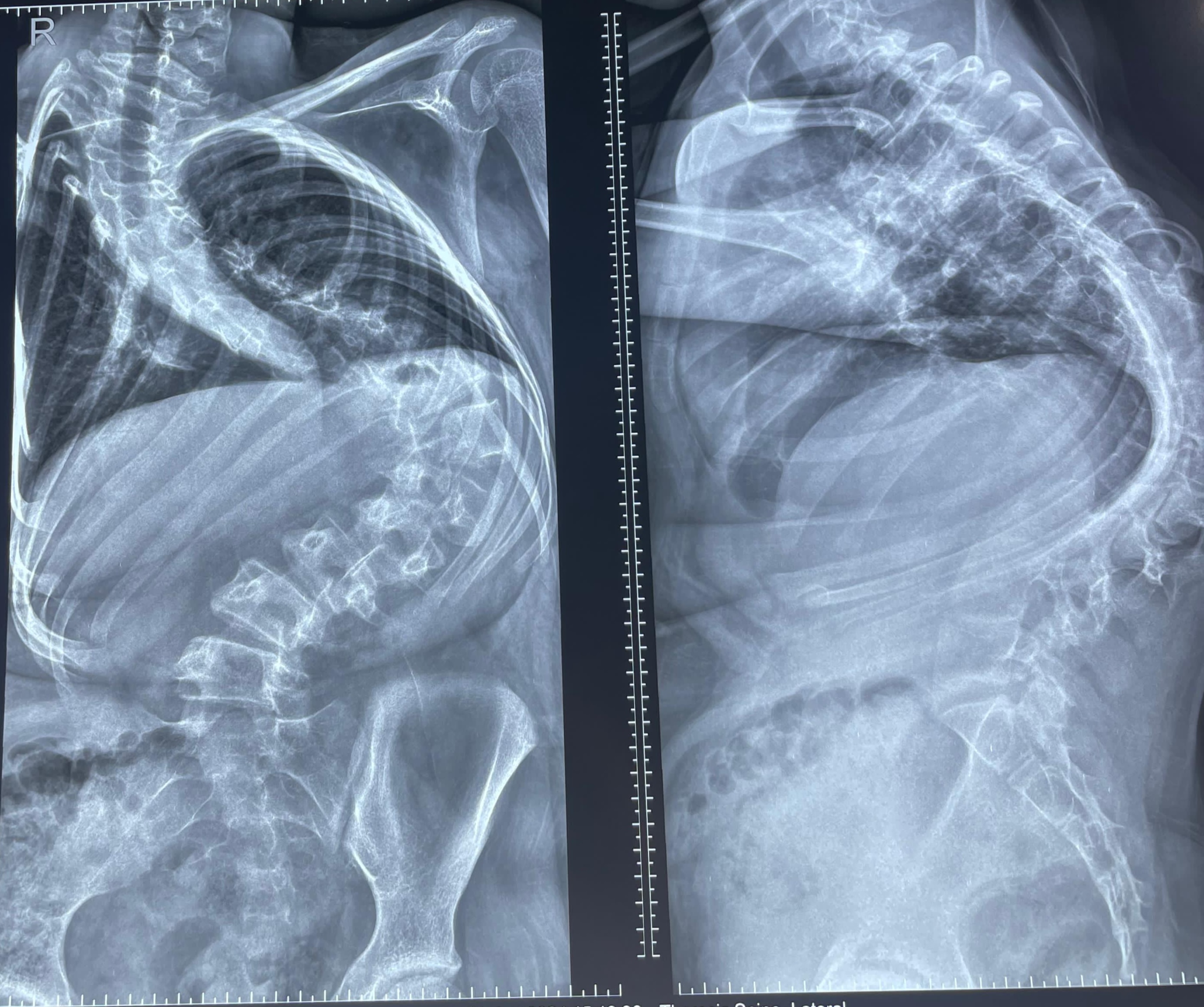
Scoliosis Surgery Scoliosis Treatment and Spine Deformity Correction in Noida Understanding Adolescent Idiopathic Scoliosis – From Early Detection to Advanced Surgical Correction Has your child developed uneven shoulders, an abnormal curve in the back, or a visible hump on one side of the chest? These changes may be early signs of scoliosis, a condition in which the spine develops an abnormal sideways curve accompanied by rotation. Scoliosis is especially important during adolescence, when children undergo rapid growth. In some patients, the spinal curvature may increase quickly during this period. Fortunately, not every child with scoliosis requires surgery. Many mild curves can be monitored, while selected progressive curves can be managed with specialized braces. However, severe or progressive scoliosis may require scoliosis correction surgery to restore spinal alignment and prevent further deformity. At Max Super Speciality Hospital, Noida, Dr. Pramod Saini, an experienced orthopaedic spine surgeon, provides comprehensive assessment and surgical management of scoliosis and complex spinal deformities. His approach emphasizes careful evaluation, appropriate selection of treatment, preservation of spinal balance, and the use of advanced technologies such as navigation and intraoperative neuromonitoring during complex spinal surgery. What Exactly Happens to the Spine in Scoliosis? A healthy spine has natural curves when viewed from the side, but it normally appears relatively straight when viewed from behind. In scoliosis, the spine bends sideways and individual vertebrae rotate. This rotation can produce a visible prominence of the ribs, commonly called a rib hump. As the deformity progresses, patients may develop: One shoulder higher than the other A prominent shoulder blade An uneven waistline A visible hump on one side of the back The trunk leaning toward one side Unequal appearance of the hips Increasing cosmetic asymmetry The spinal curvature is measured using the Cobb angle on standing X-rays. A curve measuring 10 degrees or more, with vertebral rotation, is generally classified as structural scoliosis. What Are the Main Types of Scoliosis? Scoliosis is not a single disease. Different types have different causes and treatment requirements. Idiopathic Scoliosis This is the most common form of structural scoliosis, particularly among otherwise healthy children and teenagers. The exact cause is unknown, although genetic and growth-related factors play important roles. Congenital Scoliosis This occurs when the vertebrae develop abnormally before birth. Some children have incompletely formed vertebrae or abnormal fusion between adjacent vertebrae. Neuromuscular Scoliosis This develops in patients with neurological or muscular disorders such as cerebral palsy, muscular dystrophy, or spinal muscular atrophy. Adult Degenerative Scoliosis This occurs later in life because of degeneration of the spinal discs and joints. It may be associated with back pain, leg pain, nerve compression, and difficulty walking. Syndromic Scoliosis Certain genetic and connective tissue disorders can be associated with spinal deformity. The treatment of each type differs. This page focuses mainly on Adolescent Idiopathic Scoliosis, the most common scoliosis encountered during the teenage years. Adolescent Idiopathic Scoliosis: Why Parents Should Know About It Adolescent Idiopathic Scoliosis, or AIS, generally develops between 10 years of age and skeletal maturity. It often becomes noticeable when a child experiences a rapid increase in height. Parents may observe that one shoulder is higher, the waist is uneven, or the child appears to lean toward one side. In some children, a prominent rib hump becomes visible when bending forward. Girls with AIS are more likely than boys to develop larger progressive curves requiring treatment. Is Scoliosis Caused by Poor Posture? No. Adolescent idiopathic scoliosis is not simply the result of sitting incorrectly, using a mobile phone, or carrying a heavy schoolbag. Although posture may affect the appearance of the back, it does not explain the structural vertebral rotation seen in idiopathic scoliosis. Does Scoliosis Cause Pain? Many adolescents with scoliosis have little or no pain. The condition is often detected because of changes in appearance rather than physical discomfort. Significant pain, weakness, numbness, or neurological symptoms should be investigated because they may suggest an additional underlying condition. Why Does Scoliosis Progress During Growth? The risk of progression is closely related to remaining skeletal growth. Children with substantial growth remaining have more time during which a structural curve may increase. The surgeon assesses several factors: Cobb Angle: Larger curves generally have a greater risk of progression. Age: Younger patients may have more remaining growth. Skeletal Maturity: Risser grading and Sanders staging help estimate growth potential. Menarchal Status: In girls, the timing of the first menstrual period provides additional information about skeletal maturation. Previous X-rays: Comparing serial X-rays helps determine whether the curve is stable or progressing. A child with a 25-degree curve and substantial remaining growth may require closer monitoring or bracing than a skeletally mature adolescent with the same curve. How Do We Diagnose Scoliosis? Step 1: Clinical Examination The surgeon examines shoulder height, waist symmetry, rib prominence, trunk alignment, and neurological function. The Adam's Forward Bend Test helps identify rotational deformity. Step 2: Standing Spine X-rays Full-length standing spinal X-rays are used to measure the curve and assess overall spinal alignment. The Cobb angle is measured on these radiographs. Step 3: Assessment of Growth Potential Skeletal maturity is evaluated using clinical and radiological indicators. Step 4: Additional Imaging When Required MRI may be advised when there are unusual clinical findings, neurological symptoms, atypical curve patterns, or suspicion of an underlying spinal cord abnormality. For patients being considered for surgery, flexibility radiographs and additional imaging may be required. Understanding the Severity of Scoliosis Cobb AngleTypical Treatment Approach10–19°Observation and follow-up20–24°Observation or bracing depending on growth and progression25–40°Bracing often considered in growing adolescents40–49°Individualized assessment; surgery may be considered50° or moreSurgical evaluation generally recommended These are approximate guidelines, not fixed rules. A surgeon considers growth remaining, progression, flexibility, and clinical findings before deciding treatment. Can Scoliosis Be Treated Without Surgery? Yes. Most adolescents with scoliosis do not require surgery. The objective of non-surgical treatment is to identify progressive curves early and prevent worsening. Observation Small curves may require only regular clinical and radiological follow-up. During rapid growth, follow-up is often arranged every 4–6 months, although the interval depends on the individual risk of progression. Scoliosis-Specific Physiotherapy Specialized physiotherapy, including Schroth-based exercises, can help with posture, breathing mechanics, body awareness, and muscular control. Exercises may be used alongside observation or bracing. However, exercise alone cannot reliably prevent progression of every structural scoliosis curve. Bracing Bracing is one of the most important treatments for progressive idiopathic scoliosis in skeletally immature adolescents. The brace applies corrective forces to the trunk and helps reduce the likelihood of curve progression. Its main purpose is to prevent the deformity from becoming severe enough to require surgery. Which Brace Is Best for Scoliosis? There is no single brace suitable for every child. Brace selection depends on the curve location, Cobb angle, skeletal maturity, flexibility, and the patient's ability to follow the prescribed wearing schedule. Boston Brace A rigid plastic brace extending around the trunk. It is commonly used for thoracic and lumbar scoliosis and is generally worn beneath clothing. Rigo-Chêneau Brace A custom-made three-dimensional brace designed to address spinal rotation and lateral curvature through individualized pressure and expansion areas. Milwaukee Brace A brace incorporating pelvic and upper support structures, occasionally used for selected high thoracic curves. Providence Brace A nighttime corrective brace used for selected scoliosis patterns. Charleston Bending Brace A nighttime brace designed to place the spine in an overcorrected position while the patient sleeps. How Long Does a Child Need to Wear a Scoliosis Brace Each Day? For full-time braces, many patients are advised to wear the brace for 18–23 hours daily. The prescribed duration should be followed as closely as possible because brace effectiveness is strongly associated with the number of hours worn. The brace may be removed for bathing, skin care, and selected activities according to the orthotist's and surgeon's advice. Nighttime braces follow a different schedule and are suitable only for selected patients. For How Many Months or Years Is Bracing Necessary? Bracing usually continues until the adolescent approaches skeletal maturity. For some patients, this may mean approximately 1–3 years; others may require a shorter or longer period depending on their remaining growth. The brace is not discontinued simply because the child reaches a particular age. The decision depends on skeletal maturity, growth, curve stability, and the risk of further progression. Follow-up continues after brace weaning because progression can occasionally occur. When Should Parents Consider Scoliosis Surgery? Scoliosis surgery is generally considered when the spinal curvature becomes severe or continues to progress despite appropriate conservative management. Common situations include: Curves approaching or exceeding 45–50 degrees Progressive deformity during adolescence Severe visible trunk or shoulder imbalance Large curves likely to progress after skeletal maturity Significant structural deformity requiring correction The decision should not be based on the Cobb angle alone. The surgeon also evaluates curve flexibility, skeletal maturity, spinal balance, expected progression, and the potential effect of fusion on spinal mobility. What Happens During Scoliosis Correction Surgery? For many adolescents requiring operative treatment, the standard surgical approach is posterior spinal fusion with instrumentation. During surgery, the patient is placed under general anaesthesia. The surgeon approaches the spine from the back and places pedicle screws into selected vertebrae. These screws are connected to specially contoured rods that allow controlled correction of the spinal deformity. The vertebrae are gradually realigned to improve the overall shape and balance of the spine. Bone graft is placed along the selected vertebrae to achieve spinal fusion. Once fusion develops, the operated vertebrae form a stable segment that helps maintain the correction. Does Scoliosis Surgery Make the Spine Completely Straight? The objective is not necessarily 100% correction. Every curve has a different degree of flexibility. The surgeon aims to achieve the safest appropriate correction while maintaining spinal balance and minimizing neurological risk. A well-balanced spine with durable correction is more important than obtaining a perfectly straight X-ray. What Makes Modern Scoliosis Surgery More Precise? Complex spinal deformities require careful planning because vertebrae are often rotated and their anatomy may be distorted. Two important technologies used during scoliosis correction are spinal navigation and intraoperative neuromonitoring. 1. Navigation-Assisted Scoliosis Surgery Spinal navigation provides the surgeon with three-dimensional anatomical guidance during pedicle screw insertion. In scoliosis, the pedicles may be narrow, rotated, or difficult to assess using conventional landmarks alone. Navigation can help the surgeon visualize the anatomy and plan screw trajectories more accurately. Potential Benefits Improved visualization of complex spinal anatomy Greater precision during pedicle screw placement Assistance in severely rotated vertebrae Support for accurate instrumentation planning Potential reduction in repeated fluoroscopy, depending on imaging protocol Navigation is an important surgical aid, but it does not replace the surgeon's anatomical knowledge and judgment. 2. Neuromonitoring During Scoliosis Correction The spinal cord lies within the spinal canal and must be protected throughout deformity correction. Intraoperative neuromonitoring helps the surgical team assess spinal cord pathway function during the operation. Motor Evoked Potentials and Somatosensory Evoked Potentials are commonly used. If significant monitoring changes occur, the surgical team can investigate and take corrective steps. Why Is Neuromonitoring Important? It provides continuous or repeated functional assessment during surgery It can help detect potentially concerning changes early It assists surgical decision-making during correction manoeuvres It supports neurological safety in complex spinal deformity procedures Although no technology can eliminate all risks, neuromonitoring is a valuable safety measure in modern scoliosis surgery. How Does the Surgeon Decide Which Vertebrae to Fuse? Scoliosis is frequently more complex than a single sideways curve. Some patients have one major thoracic curve, while others have double or triple curves. The surgeon uses the Lenke classification, standing X-rays, and flexibility radiographs to determine the structural curves requiring correction. The six Lenke patterns include main thoracic, double thoracic, double-major, triple-major, thoracolumbar/lumbar, and combined thoracolumbar/lumbar-main thoracic patterns. The objective is to correct the necessary structural curves while preserving as many healthy mobile spinal segments as possible. This is particularly important in adolescent patients who are expected to remain active for many decades after surgery. What Should Families Know Before Scoliosis Surgery? Scoliosis correction is a major procedure that requires detailed planning. Before surgery, the patient and family should understand: The degree and pattern of the spinal deformity Whether the curve is likely to progress The planned correction and fusion levels Expected improvement in alignment and appearance The potential effect on spinal mobility The role of navigation and neuromonitoring The possibility of blood loss or transfusion Neurological and other surgical risks Expected hospitalization and recovery Long-term follow-up requirements The final decision is made after discussing the expected benefits and risks of surgery compared with continued observation or bracing. Recovery After Scoliosis Surgery First Few Days Patients receive pain management and neurological monitoring after surgery. Mobilization generally begins early when medically appropriate. Hospital Stay Hospitalization is commonly around 4–7 days, depending on the complexity of the procedure and the patient's recovery. First Month Walking and basic daily activities are gradually increased. Many adolescents can return to school within approximately 3–6 weeks, depending on recovery and the surgeon's advice. Three to Six Months Activity levels increase progressively, although strenuous exercise and contact sports may remain restricted. Six to Twelve Months Fusion continues to consolidate, and patients gradually return to a wider range of activities based on healing and surgical guidance. Follow-up X-rays are used to assess spinal alignment and instrumentation. What Are the Risks of Scoliosis Surgery? Possible complications include infection, bleeding, neurological injury, implant-related complications, failure of fusion, residual deformity, and the need for additional surgery. The risks depend on the severity of the deformity, the number of fused levels, the patient's overall health, and the complexity of correction. Modern instrumentation, careful surgical planning, navigation, and intraoperative neuromonitoring are used to support precision and safety. What Is Life Like After Scoliosis Correction Surgery? Many adolescents who undergo scoliosis correction return to active, independent lives. Most can resume walking, attending school, routine exercise, and normal daily activities after appropriate recovery. The fused spinal levels permanently lose their individual motion, but unfused portions of the spine continue to move. The amount of remaining spinal flexibility depends on the levels fused, particularly whether the fusion extends into the lumbar spine. Long-term follow-up is important to assess alignment, fusion, and overall function. Frequently Asked Questions Is scoliosis common in teenage girls? Adolescent idiopathic scoliosis affects both boys and girls. However, girls are more likely to develop progressive curves that require bracing or surgery. Will my child need surgery for a 20-degree curve? Usually not. Many 20-degree curves are managed with observation. Bracing may be considered when there is significant growth remaining and evidence of progression. Can a brace completely straighten scoliosis? A brace may temporarily improve alignment while being worn, but its main purpose is to prevent progression during growth. Can scoliosis get worse after puberty? Yes. Larger curves may continue progressing after skeletal maturity, particularly those measuring approximately 50 degrees or more. Is scoliosis surgery performed from the back? Most adolescent idiopathic scoliosis correction procedures are performed using a posterior approach with pedicle screw instrumentation and fusion. Is neuromonitoring used during scoliosis surgery? Intraoperative neuromonitoring is commonly used during modern scoliosis correction to help assess spinal cord pathway function. Does surgery affect height? Correction of a significant spinal curve can increase standing height because the spine becomes more aligned. The amount varies according to the original deformity and correction achieved. Will implants need to be removed later? In most patients, spinal implants remain permanently unless a complication or specific clinical indication requires their removal. Can scoliosis recur after surgery? A successful spinal fusion generally prevents progression within the fused segment. However, loss of correction, junctional changes, or progression in unfused segments can occur in some patients. Can scoliosis affect confidence and body image? Yes. Visible trunk asymmetry and rib prominence can affect body image, especially during adolescence. These concerns deserve attention alongside radiological and functional findings. Why Consult Dr. Pramod Saini for Scoliosis Treatment in Noida? Scoliosis treatment requires more than measuring a spinal curve. The surgeon must understand the patient's growth potential, curve progression, three-dimensional spinal alignment, and long-term functional requirements. Dr. Pramod Saini is an orthopaedic spine surgeon with more than 15 years of experience and expertise in complex spine surgery, spinal deformity correction, and advanced spinal instrumentation. He is the Associate Director and Unit Head, Department of Orthopaedic Spine Surgery, Max Super Speciality Hospital, Noida. His areas of expertise include: Adolescent idiopathic scoliosis Complex spinal deformity correction Posterior spinal fusion and instrumentation Navigation-assisted spinal surgery Neuromonitoring-assisted scoliosis correction Complex cervical and lumbar spine surgery Revision spine surgery Endoscopic and minimally invasive spine procedures Dr. Saini has completed advanced specialist training in spine surgery, including an FNB in Spine Surgery from P. D. Hinduja Hospital, Mumbai, along with further training in advanced spinal surgical techniques. At Max Hospital, Noida, scoliosis correction procedures are performed with an emphasis on individualized planning, careful selection of fusion levels, neurological protection, and restoration of balanced spinal alignment. Book a Scoliosis Consultation in Noida If your child has uneven shoulders, a prominent rib hump, an abnormal spinal curve, or a diagnosis of adolescent idiopathic scoliosis, early specialist evaluation can help determine whether observation, bracing, or surgery is appropriate. Dr. Pramod Saini Orthopaedic Spine Surgeon Associate Director & Unit Head – Orthopaedic Spine Surgery Max Super Speciality Hospital Sector 128, Noida, Uttar Pradesh Contact: +91 95994 28924 Specialist consultation for adolescent idiopathic scoliosis, scoliosis bracing, curve progression, and advanced scoliosis correction surgery in Noida and Delhi NCR. Medical disclaimer: This content is educational and does not replace an individualized consultation with a qualified spine specialist.


